
Every January starts the same way: big plans, a fresh notebook, and a quiet promise to finally get organized. By March, the notebook is buried under mail, the plans are vague memories, and the year feels like it’s happening to you instead of with you.
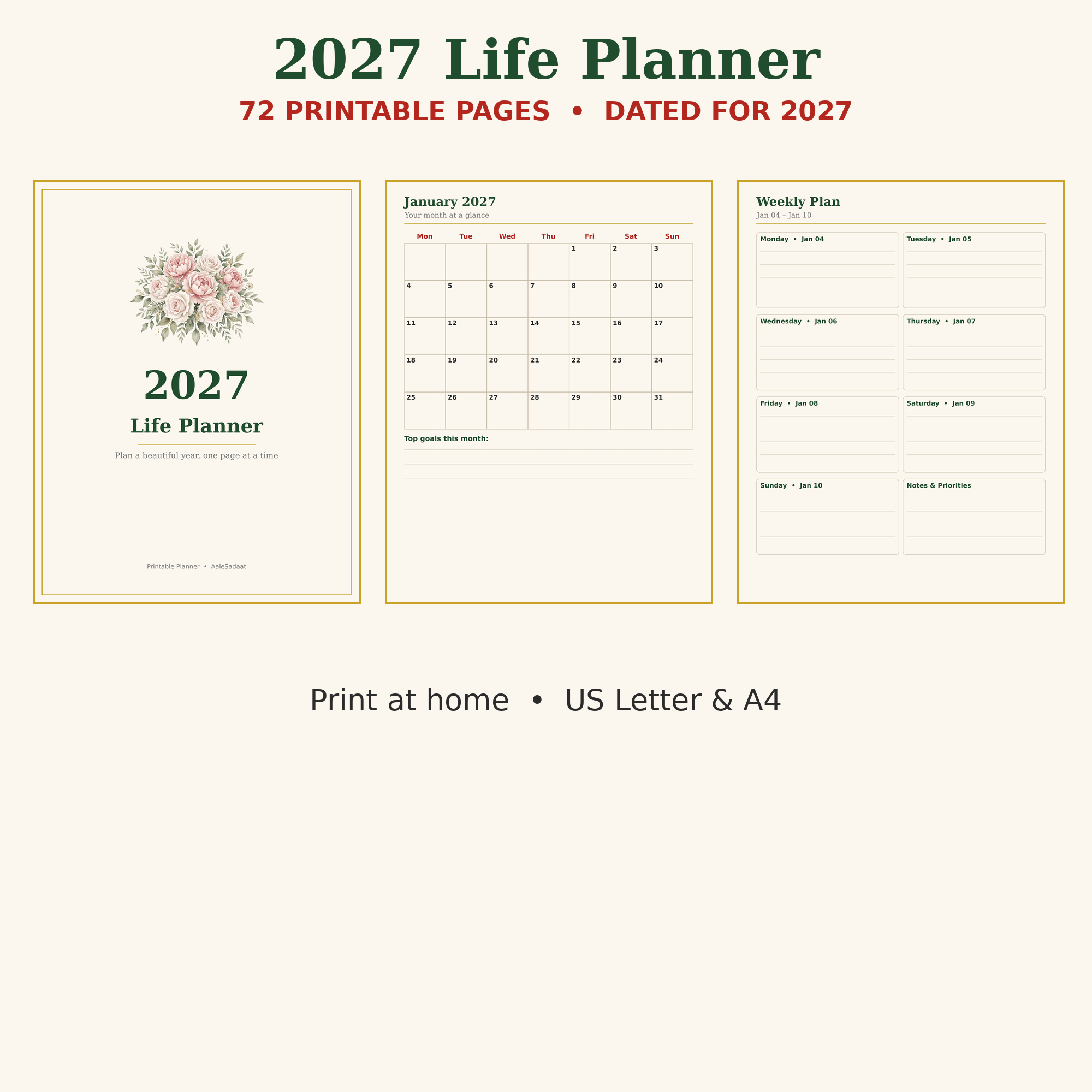
A printable planner fixes that — not because it’s magic, but because it gives you one place for everything. Goals, budgets, meals, holidays, appointments, and to-do lists all live in the same binder, on paper you can actually see. No apps to open, no notifications to ignore, no subscription to renew.
And unlike a store-bought planner, a printable one bends to your life. Don’t need a habit tracker? Skip it. Need extra budget pages in December? Print more. Want a fresh start in July? Print a new month and keep going. Your planner grows with you, instead of forcing you into someone else’s layout.
Why Paper Wins Over Planning Apps
Planning apps are convenient, but they have a hidden cost: distraction. Every time you open an app to check your calendar, you’re one notification away from losing twenty minutes to social media. Paper doesn’t ping you. It doesn’t update, crash, or lock your plans behind a paywall.
There’s also something powerful about writing by hand. Studies consistently show that writing goals down makes you more likely to achieve them, and seeing your whole week on one page helps you spot conflicts, gaps, and overloaded days before they happen. A paper planner turns planning from a chore into a calming ritual — ten quiet minutes with a pen and a cup of coffee.
A printable planner gives you the best of both worlds: the flexibility of digital (print only what you need, whenever you need it) and the focus of paper (no screens, no distractions). If you’re ready to try it, the 2027 Life Planner is a complete system designed exactly for this — yearly goals, monthly budgets, weekly meals, and holiday planning in one printable bundle.
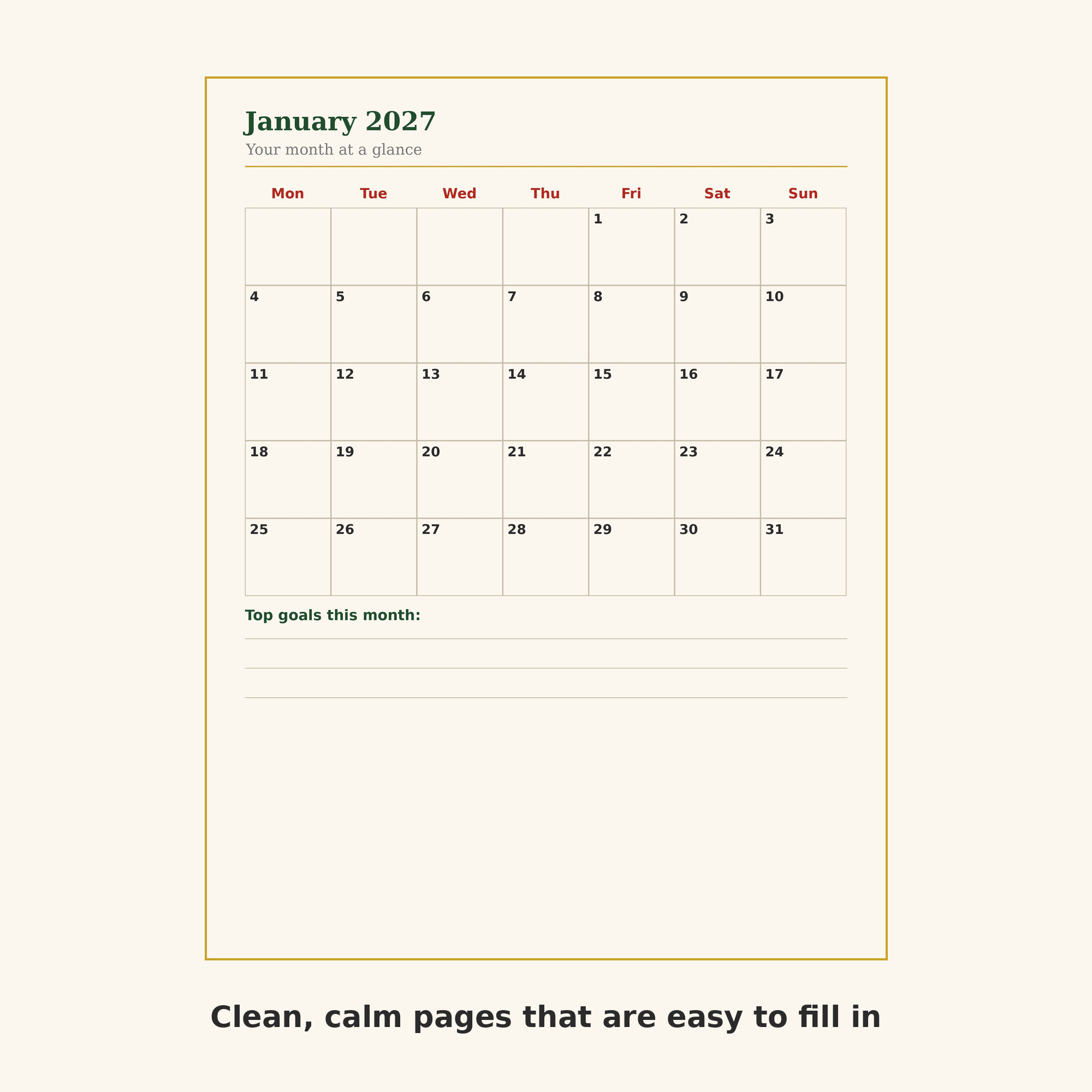
The Build-Your-Binder System: Plan Your Whole Year in 4 Steps
The secret to a planner that actually works isn’t buying more pages — it’s building a system you’ll use every day. Here’s a simple four-step system that turns a stack of printouts into a whole-year plan.
Step 1: Set Your Year at a Glance
Start with a yearly overview page. Write down the big things: holidays, birthdays, vacations, school terms, work deadlines, and any goals you want to hit. Seeing the whole year on one page helps you space things out — you won’t plan a kitchen renovation, a vacation, and a major work project all in the same month.
Next, pick three goals for the year — not ten, just three. Write them on your yearly goals page, then break each one into quarterly milestones. A goal like “save $2,400” becomes “save $600 per quarter,” which becomes “save $200 per month.” Suddenly the big goal feels doable.
Step 2: Master Your Money Month by Month
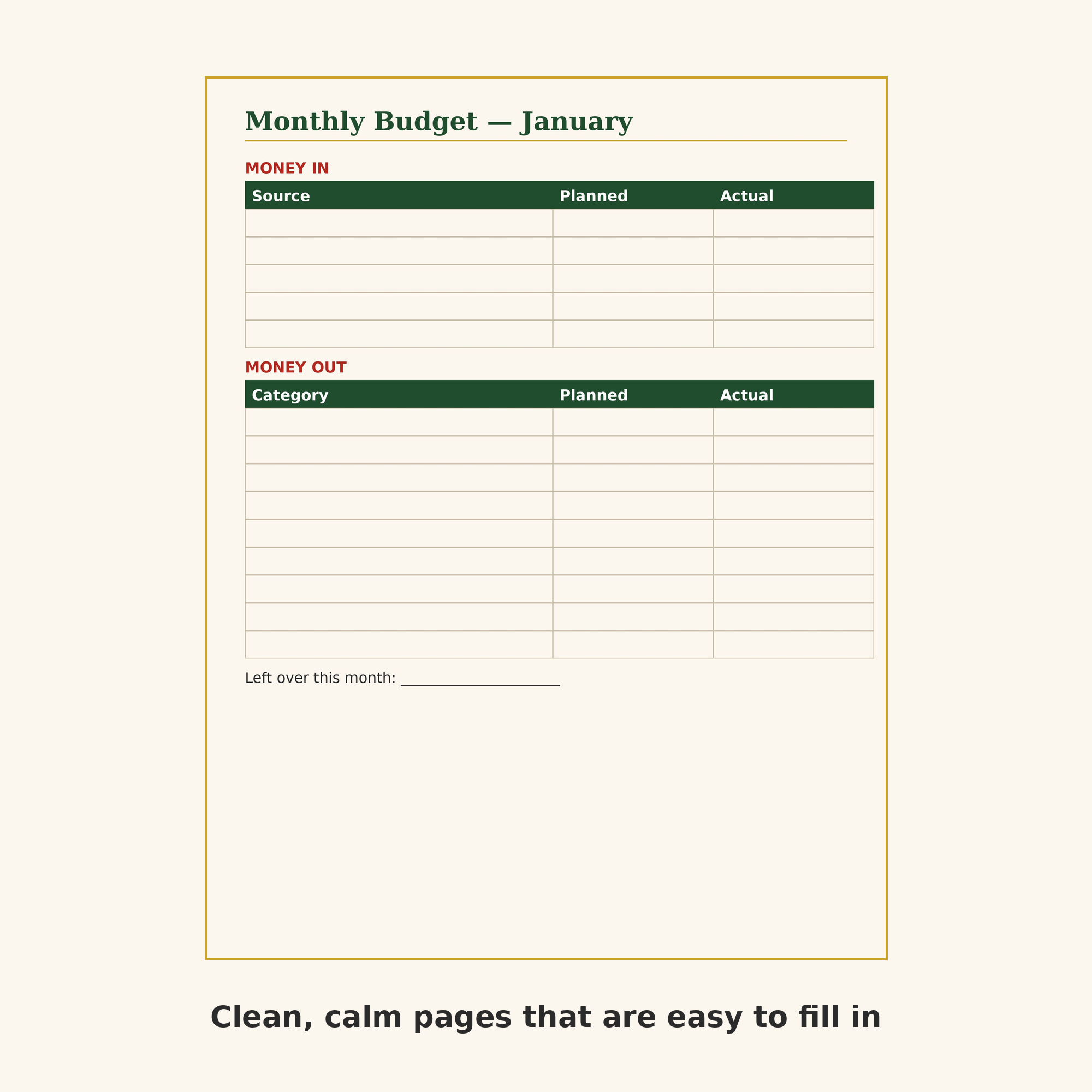
Money stress is often just planning stress in disguise. A monthly budget page fixes it by showing you exactly where your money goes — and where it should go. At the start of each month, write down your income, fixed bills, and savings goal. Track spending as you go, and review at month’s end.
The key is to make it a habit, not a chore. Spend five minutes each Sunday updating your budget, and you’ll spot problems early — before they become crises. Over a year, those five minutes add up to real financial calm. For dedicated budget pages, the Budget Planner pairs perfectly with the life planner, with bill trackers, savings goals, and expense logs.
Step 3: Take the Stress Out of Dinners
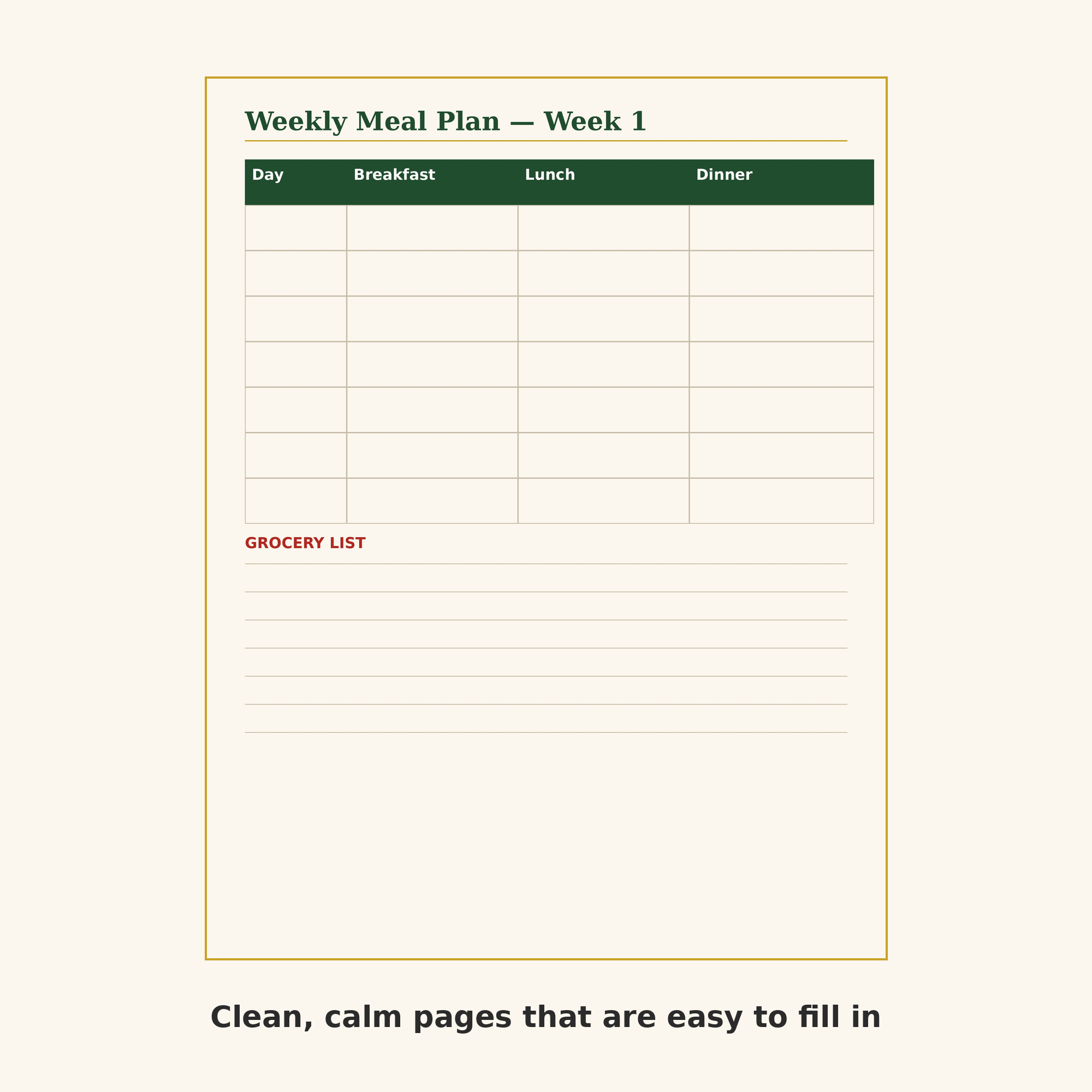
“What’s for dinner?” is the question that derails more evenings than any other. A weekly meal planner ends it. Sit down once a week — Sunday works for most families — and plan seven dinners. Write a grocery list from the plan, shop once, and you’re done.
The magic isn’t just in saving time; it’s in saving money. When you plan meals, you stop buying random ingredients, stop ordering takeout out of desperation, and stop throwing away food you forgot you bought. Families who meal plan routinely save hundreds of dollars a year. The Meal Planner includes weekly dinner plans with matching grocery lists, so the whole system fits on one page.
Step 4: Make Holidays Calm, Not Chaotic
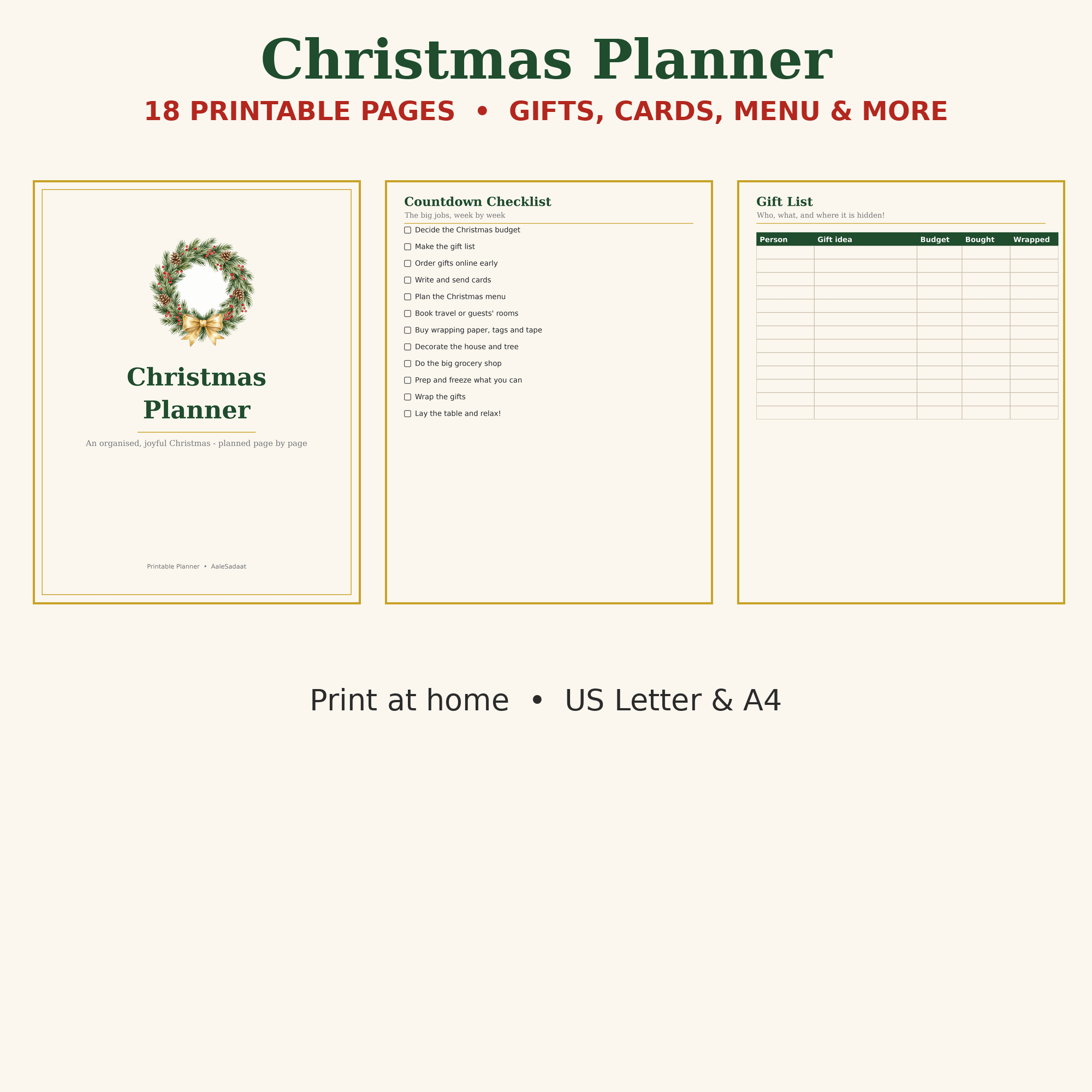
Holidays should be joyful, not stressful — but they become stressful when gift lists, budgets, and party plans live in your head (or in five different phone notes). A dedicated holiday section in your binder changes that. Gift lists with budgets, card lists, party plans, and decoration checklists all in one place.
Start your holiday planning in October, not December. A little planning early means you can shop sales, spread spending over months, and actually enjoy December instead of surviving it. The Christmas Planner is built for exactly this, and the 2027 Wall Calendar keeps the whole family on the same page.
Printing and Binder Tips
A printable planner is only as good as your printing setup. Here’s how to make it look and feel professional:
Paper matters. Use standard copy paper for everyday pages, and heavier paper (28 lb or cardstock) for dividers and covers. Your binder will feel sturdier, and pens won’t bleed through.
Print double-sided to save paper. Most planner pages are designed to work double-sided, which keeps your binder slim. If your printer supports duplex printing, use it — if not, print odd pages first, flip the stack, then print even pages.
Choose the right binder. A 1-inch binder works for a single quarter; a 1.5-inch or 2-inch binder holds a full year comfortably. Use tab dividers for each section — Yearly, Monthly, Weekly, Budget, Meals, Holidays — so you can flip to what you need instantly.
Print in batches. Don’t print the whole year at once. Print one month at a time, plus your yearly pages. That way, if your needs change (and they will), you’re not stuck with pages you’ll never use.
How to Stick With Your Planner All Year
The best planner in the world is useless if it sits on a shelf. Here’s how to make planning a habit that lasts past February:
Pick a planning time. Ten minutes every Sunday evening is enough. Review last week, plan next week, update your budget, and pick your meals. Make it a ritual — same time, same place, same cup of tea.
Keep it visible. Don’t hide your binder in a drawer. Keep it on your desk, kitchen counter, or wherever you’ll see it daily. A planner you see is a planner you use.
Forgive missed days. You will miss a week. Everyone does. Don’t throw the whole system away because of one bad week — just pick it up where you left off. Progress, not perfection, is the goal.
Review monthly. At the end of each month, spend fifteen minutes reviewing: What worked? What didn’t? What needs to change? Adjust your system, print fresh pages if needed, and move forward. Your planner should evolve with you.
Frequently Asked Questions
What size should I print my planner?
Most printable planners are designed for US Letter (8.5 × 11 inches), which fits standard binders and printers. Some also include A4 versions. Letter size gives you plenty of writing space without feeling cramped.
Can I use a printable planner with a digital calendar?
Absolutely — many people use both. Use your printable planner for daily planning, goals, and reflection, and a digital calendar for reminders and shared family events. The two complement each other perfectly.
How often should I print new pages?
Print monthly pages at the start of each month, weekly pages each Sunday, and budget pages as needed. Yearly pages only need printing once. This keeps your binder fresh without wasting paper.
Is a printable planner good for families?
Yes — it’s ideal for families. A wall calendar keeps everyone on the same page, meal planners reduce dinner stress, and budget pages help the whole household stay on track. Print extra copies for older kids so they can plan too.
Final Thoughts
Planning your whole year doesn’t require a perfect system, an expensive planner, or a personality transplant. It just requires one binder, a handful of pages, and ten minutes a week. Start with your yearly goals, add monthly budgets and weekly meals, and give holidays their own section — and you’ll be amazed at how much calmer your year feels.
The year won’t plan itself. But with a printable planner, you can plan it — one page, one week, one month at a time.
You May Also Like
For more planning ideas, check out our printable meal planner, printable budget planner, and printable weekly planner. For the holidays, don’t miss our Christmas planner printable and printable Christmas party games.
Browse more printable planners and organizers in our Etsy shop.

