
You have picked the crib, chosen the paint color, and folded a mountain of tiny clothes — but the walls are still bare, and the room doesn’t quite feel finished. The good news: wall art is the cheapest change that makes the biggest difference in a nursery. A few well-placed prints add color, warmth and personality in one afternoon, with no paint, no wallpaper and no big budget.
The hard part isn’t finding cute art — it’s hanging it at the right height, in the right sizes, in an arrangement that looks intentional, not random. This guide gives you the exact numbers designers use, print sizes in plain English, five layouts that always work, and the safety rules that matter in a baby’s room.
The 3 Numbers to Know
Almost every “why does this wall look off?” problem comes down to three measurements. Learn these, and you can arrange any prints anywhere:
- 57 inches — the eye-level rule. Above a changing table or any spot where you mostly stand, hang the center of the artwork (or of a whole group) about 57 inches from the floor. It’s the gallery standard — average eye level.
- 48–52 inches — the seated rule. Where you mostly sit — the nursing chair corner, a reading nook — hang art lower, with the center around 48 to 52 inches, so it meets seated eyes.
- 6–8 inches — the furniture gap. When art hangs above furniture — a crib, dresser or bookshelf — leave just 6 to 8 inches between the top of the furniture and the bottom of the frame. Any higher and the art floats away, disconnected; this small gap makes furniture and art read as one group.
One last rule ties it together: art should span about one-half to two-thirds of the width of the furniture below it. A standard crib is about 54 inches wide, so the art above it should cover roughly 27 to 36 inches in total width. A single small 8×10 above a wide crib will always look lost — a width problem, not a taste problem.
Print Sizes Decoded
Print sizes sound like a math test, but each one has a natural home in the nursery:
- 5×7 inches — the accent. Too small to stand alone on a wall. Lean one on a dresser top, set one on a shelf among books, or use 5×7s as the smallest members of a gallery mix.
- 8×10 inches — the team player. The classic small print. Rarely a solo act, but perfect in pairs, trios and grids — the size to build a set with.
- 11×14 inches — the sweet spot. Big enough to hold its own above a dresser or changing table, small enough to group. If you buy one size for a trio, make it this one.
- 16×20 inches — the statement. One 16×20 (or larger) anchors a wall by itself: above the crib, over the glider, or as the centerpiece smaller prints gather around.
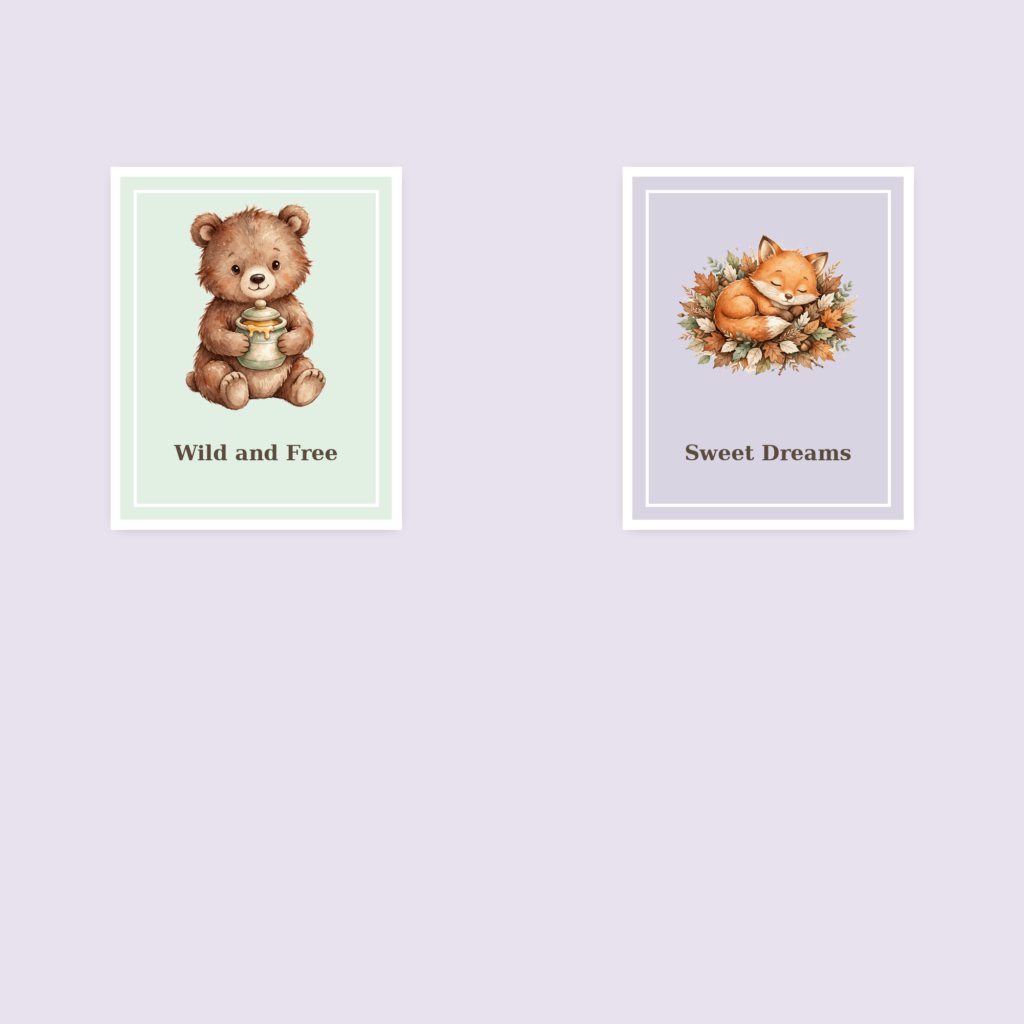
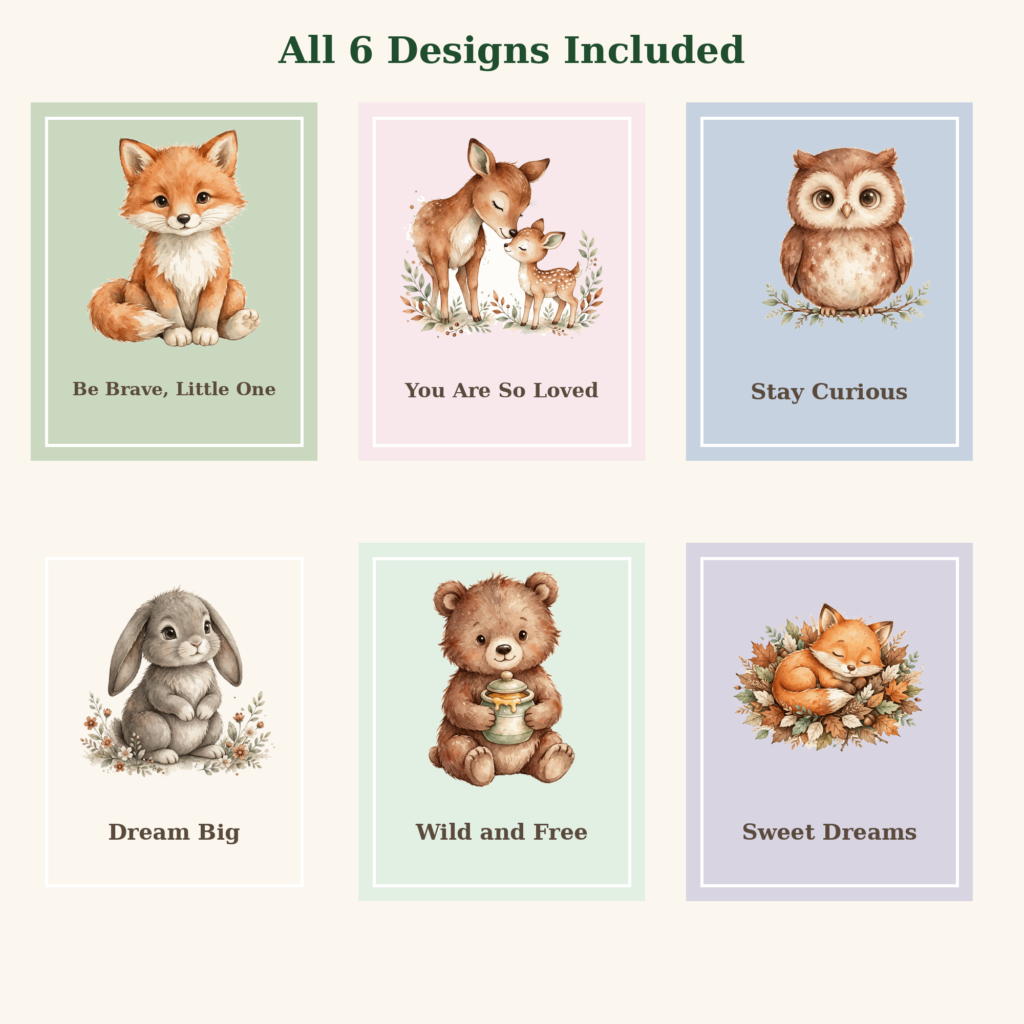
Sizes mix beautifully, but frames should match: the same frame style in different sizes looks curated; mixed frames look accidental. Printable sets make this easy — one download gives you the same artwork in several sizes. Our Woodland Nursery Wall Art set, for example, includes multiple sizes of each design, so you can test a layout before buying frames.
5 Layouts That Always Work
1. The Trio Above the Crib
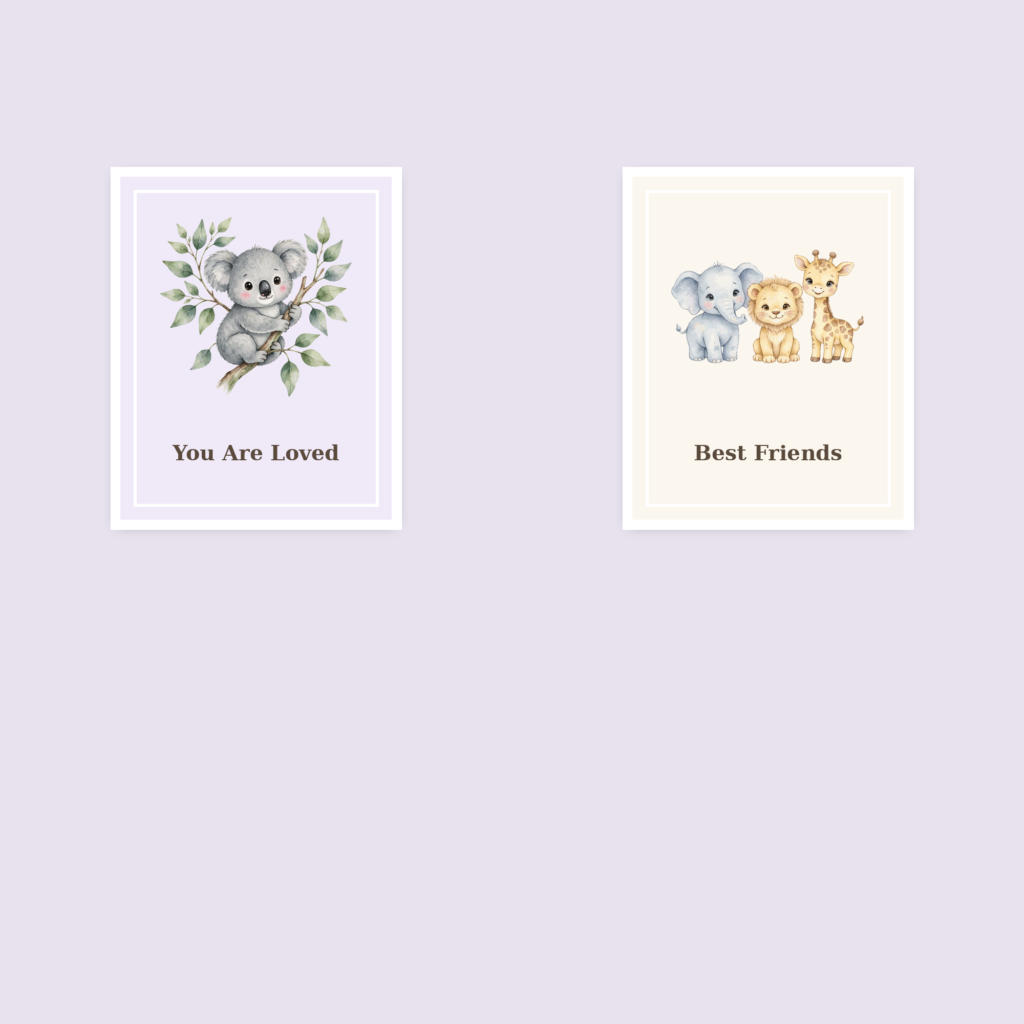
Three matching prints in a straight row — the most classic nursery look there is. Use three 11×14s spaced 2–3 inches apart, bottoms aligned; with frames and gaps the total lands right in that one-half to two-thirds zone above a crib. Sweet animal sets are made for this — our Baby Animals Wall Art trio of soft watercolor babies is the kind of gentle, matching set that makes a trio look effortless.
2. The Grid of 4 or 6
Four or six same-size prints (8×10 or 11×14) in a perfect rectangle, all gaps equal at 2 inches. The grid is tidy, modern and forgiving — perfect for the changing-table wall. Mark every corner with painter’s tape first, and the whole grid goes up in twenty minutes.
3. The Gallery Mix
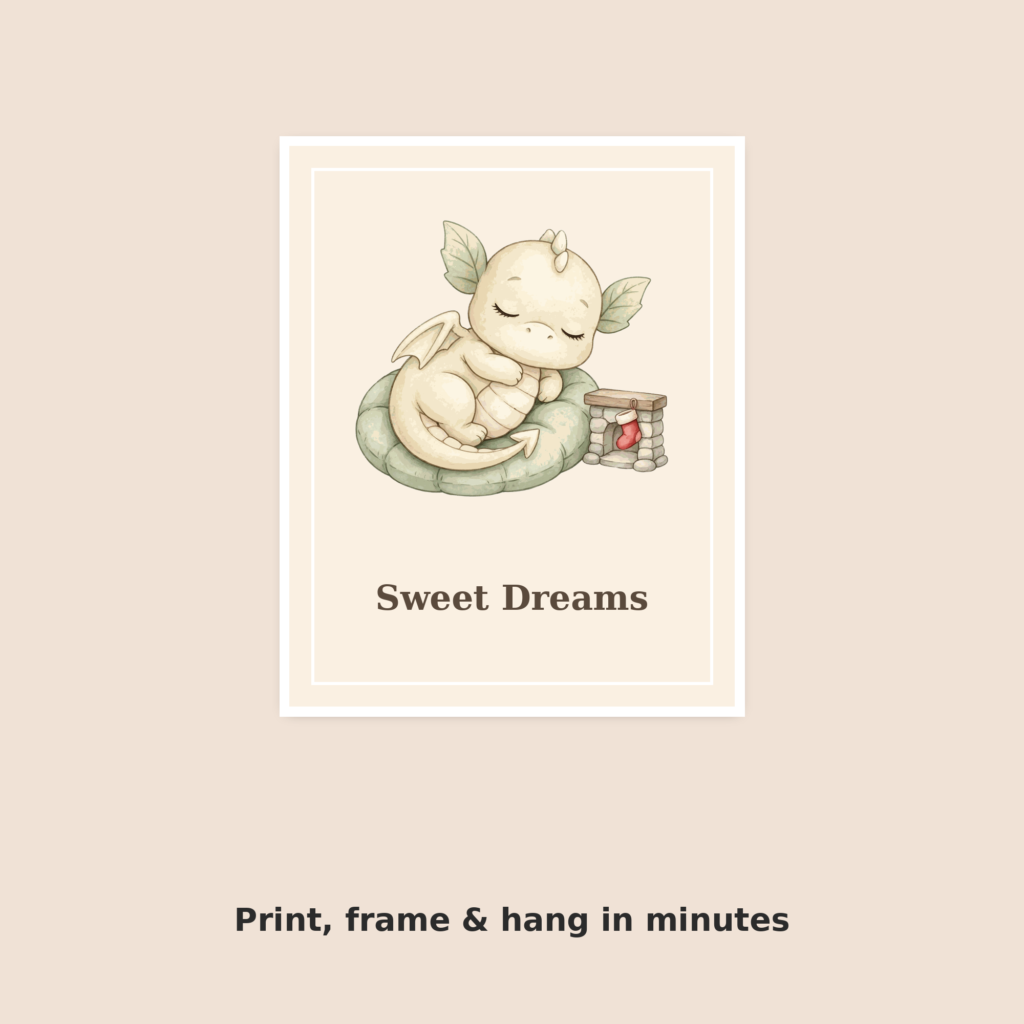
Different sizes, one color palette, arranged as one loose group: a 16×20 anchor, two 11×14s, a few 8×10s and a 5×7 or two. Lay it all on the floor first, photograph it, adjust, and only then hang — starting with the biggest piece, placed slightly off-center. This is the layout for themes with range: a storybook corner mixing our Baby Dragon Nursery Wall Art with softer animal prints — same gentle watercolor style, different sizes.
4. The Single Statement Piece
One large print, 16×20 or bigger, centered above the crib or glider. Minimal, calm, and the fastest layout to hang — just respect the width rule: at least half the width of what sits below it. It works especially well in small nurseries, where one strong picture beats five small ones competing for attention.
5. The Dresser Pair
Two matching 11×14s side by side above the dresser or changing table, 2–3 inches apart, hung a touch lower than usual. The pair mirrors the dresser’s symmetry, turns a practical corner into a styled one, and gives your baby something sweet to look at during changes.
Safety First: Hanging Art in a Baby’s Room
A nursery is not a living room — little hands grab, shake and eventually climb toward anything interesting. Decorate for the toddler your newborn will become:
- Never hang a heavy frame or real glass directly above the crib. Above a crib, choose lightweight frames with acrylic (shatter-safe) fronts instead of glass — or move the art to the wall beside the crib.
- Anchor everything properly. Use wall anchors rated for the frame’s weight, not a single nail — and never just a sticky strip for anything heavier than paper. Tug-test each frame firmly before calling it done.
- Secure frames to the wall at the bottom too. Removable mounting putty on the bottom corners stops frames swinging or being pulled forward by curious fingers.
- Keep cords and extras out of reach. Any hanging cords, fairy lights or mobiles near the art must be well out of grabbing range, and re-checked as your baby starts standing.
Print & Frame on a Budget
A designer-looking wall does not need a designer budget. The printable route cuts the cost dramatically: you buy a digital file once, print only the sizes your layout needs, and frame them yourself. Print shops print an 11×14 for a few dollars, and standard-size frames from craft stores — especially in multipacks — cost a fraction of custom framing.
The cheapest upgrade of all is a mat. An 8×10 print in an 11×14 frame with a white mat looks twice the size and twice the price. Buy frames a size up with mats included, keep the frame color consistent, and a whole gallery can cost less than one custom-framed piece.

Quick Questions
How high should pictures hang above a crib?
Leave 6–8 inches between the top of the furniture and the bottom of the frame. For a crib, though, safety outranks the tape measure: only lightweight, acrylic-front frames above a crib — never real glass or a heavy frame that could fall in — or place the art on the adjacent wall instead.
What is the best print size above a dresser?
One 16×20 statement print, or a pair or trio of 11×14s. Together they should span one-half to two-thirds of the dresser’s width — a standard dresser is 48–54 inches wide, so aim for 24–36 inches of art.
Can I mix different art styles in one nursery?
Yes, if two things stay consistent: the color palette and the frames. Different subjects in one soft color family, all in matching frames, read as one collection. Mixing frame styles, colors and bold themes at once is what looks random.
How do I plan a layout without making holes everywhere?
Tape paper templates the size of each frame to the wall in the full arrangement. Live with it for a day, view it from the doorway and the nursing chair, adjust the spacing — then hang through the templates and tear them away.
Final Thoughts
Arranging nursery wall art is mostly measuring, not talent: center standing art at 57 inches, seated art at 48–52, keep 6–8 inches above furniture, and let the art span half to two-thirds of what’s below it. Pick one of the five layouts, keep frames matching, anchor everything safely — and enjoy the first room your baby will ever know.
Ready to start your wall? Our printable nursery sets are 50% off until November 29 — pick a set, print the sizes your layout needs, and your bare wall can be finished this weekend.
You May Also Like
- Woodland Nursery Decor Ideas: A Calm, Cozy Room Your Baby Will Love — colors, textures and finishing touches.
- How to Crochet an Elephant for Beginners — a handmade keepsake to sit under your prints.
- Visit the AaleSadaat Etsy shop — nursery wall art sets, printables and crochet patterns.

